Welcome to Guest !
 
       IUP Publications
              (Since 1994)
Home About IUP Journals Books Archives Publication Ethics
     
  Subscriber Services   |   Feedback   |   Subscription Form
 
 
Login:
- - - - - - - - - - - - - - - - - -- - - - - - - - - - - -
-
   
- - - - - - - - - - - - - - - - - - - - - - - - - - - - - - -
 
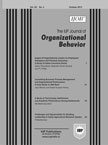
The IUP Journal of Organizational Behavior

Apr'14
Focus

This issue contains four papers. The first paper, “How Managers’ Emotional Intelligence Impacts Employees’ Satisfaction and Commitment: A Structural Equation Model”, by Kerry Webb,

Articles
   
Price
(INR)
Buy
How Managers’ Emotional Intelligence Impacts Employees’ Satisfaction and Commitment: A Structural Equation Model
The Relationship Between Breach of Psychological Contract and Workplace Deviant Behavior
An Introspection of Employee Engagement:
A Quantitative Content Analysis Approach
Overcoming Obstacles to Career Advancement: A Study of Female Executives in India’s Service Sector
Select/Remove All    

How Managers’ Emotional Intelligence Impacts Employees’ Satisfaction and Commitment: A Structural Equation Model

--Kerry Webb

The study explores the power of Structural Equation Model (SEM) to determine the relationship between managers’ emotional intelligence and employee satisfaction and commitment in the workplace. This investigation of managerial behavior utilizes SEM to provide a visual portrayal of the relationship and impact on employee attitudes. The study provides suggestions which may help managers and supervisors to influence employees toward higher levels of satisfaction, commitment and performance in the workforce.

Article Price : Rs.50

The Relationship Between Breach of Psychological Contract and Workplace Deviant Behavior

--Anwar Hussain

The purpose of this study is to understand the effect of breach of psychological contract on workplace deviant behavior of Information Technology (IT) professionals of Pakistan. There is a need for this study as it was seen that the IT industry of Pakistan could not flourish as much as the IT industries of India and other regional countries. One of the major problems regarding IT industry in Pakistan is that there is a lack of organizational commitment. So, this study tried to find out the reasons behind this problem. From the preliminary research, it was found that the two key factors affecting commitment in IT industry are compensation and psychological contract. Breach of psychological contract and workplace deviant behavior were measured with the help of a questionnaire. The statistical analysis was conducted to find out the relationship. The study shows that if there is a breach of psychological contract on the part of the employer, then the employee tends to show negative behavior and attitude. This can result in reduced loyalty, decrease in organizational commitment and organizational citizenship behavior, and it increases workplace deviant behavior. The performance of the employee is affected and hence it affects the overall productivity of the organization. The implications are discussed and a further study is proposed.

Article Price : Rs.50

An Introspection of Employee Engagement: A Quantitative Content Analysis Approach

--Shiv Kumar Sharma and Sukhmeet Kaur

Employee engagement is an emerging approach for organizational success as well as holding talented employees. Engagement contributes extensively to an organization’s performance, leading to improvement in profitability, customer satisfaction and long-term financial results. It also helps the employees to make a noteworthy contribution to their organization. Lack of consensus among the academicians, research scholars and management consultants on the definition of engagement has created an academic and research gap. A majority of reviewed conceptualizations shared a multidimensional nature of employee engagement. This paper is based on quantitative content analysis of employee engagement. The purpose of the study is to determine the frequency of different dimensions employed to define engagement. The results illustrate that psychological investment and work-role performances are the most counted dimensions to measure employee engagement.

Article Price : Rs.50

Overcoming Obstacles to Career Advancement: A Study of Female Executives in India’s Service Sector

--Akanksha Anand

Very little is known about the executive women in management of the India’s service sector. The service sector’s human capital contributes nearly half of the Gross Domestic Product (GDP) of India. Globalization needs this human capital and women managers in the labor market are increasing with the demand for talented human resource. Women occupy different organizational ranks from the front line to management. However, very few women are present in senior level positions of service sector organizations. The management board, particularly of the banking, finance and hospitality industry, has newly seen the first ever women in their board of directors. Women managers easily occupy entry and middle level positions, although they encounter challenges in reaching management roles from within and outside of an organization. This paper highlights the organizational, societal and individual level barriers that exist for women in three service sector organizations. Finally, the paper suggests organizational policies for human resource management and recommendations to encounter the disproportionate representation of women in the globalized workforce.

Article Price : Rs.50


Search
 

  www
  IUP

Search
- - - - - - - - - - - - - - - - - - - - - - - - - - - - - - -
 
- - - - - - - - - - - - - - - - - - - - - - - - - - - - - - -
 
- - - - - - - - - - - - - - - - - - - - - - - - - - - - - - -

Click here to upload your Article

- - - - - - - - - - - - - - - - - - - - - - - - - - - - - - -
Automated Teller Machines (ATMs): The Changing Face of Banking in India

Bank Management
Information and communication technology has changed the way in which banks provide services to its customers. These days the customers are able to perform their routine banking transactions without even entering the bank premises. ATM is one such development in recent years, which provides remote banking services all over the world, including India. This paper analyzes the development of this self-service banking in India based on the secondary data.

The Information and Communication Technology (ICT) is playing a very important role in the progress and advancement in almost all walks of life. The deregulated environment has provided an opportunity to restructure the means and methods of delivery of services in many areas, including the banking sector. The ICT has been a focused issue in the past two decades in Indian banking. In fact, ICTs are enabling the banks to change the way in which they are functioning. Improved customer service has become very important for the very survival and growth of banking sector in the reforms era. The technological advancements, deregulations, and intense competition due to the entry of private sector and foreign banks have altered the face of banking from one of mere intermediation to one of provider of quick, efficient and customer-friendly services. With the introduction and adoption of ICT in the banking sector, the customers are fast moving away from the traditional branch banking system to the convenient and comfort of virtual banking. The most important virtual banking services are phone banking, mobile banking, Internet banking and ATM banking. These electronic channels have enhanced the delivery of banking services accurately and efficiently to the customers. The ATMs are an important part of a bank’s alternative channel to reach the customers, to showcase products and services and to create brand awareness. This is reflected in the increase in the number of ATMs all over the world. ATM is one of the most widely used remote banking services all over the world, including India. This paper analyzes the growth of ATMs of different bank groups in India.
International Scenario

If ATMs are largely available over geographically dispersed areas, the benefit from using an ATM will increase as customers will be able to access their bank accounts from any geographic location. This would imply that the value of an ATM network increases with the number of available ATM locations, and the value of a bank network to a customer will be determined in part by the final network size of the banking system. The statistical information on the growth of branches and ATM network in select countries.

Indian Scenario

The financial services industry in India has witnessed a phenomenal growth, diversification and specialization since the initiation of financial sector reforms in 1991. Greater customer orientation is the only way to retain customer loyalty and withstand competition in the liberalized world. In a market-driven strategy of development, customer preference is of paramount importance in any economy. Gone are the days when customers used to come to the doorsteps of banks. Now the banks are required to chase the customers; only those banks which are customercentric and extremely focused on the needs of their clients can succeed in their business today.

more...

 
View Previous Issues
Organizational Behavior